schuh
A/B tested product card redesign that drove a 1.65% in add-to-bag rate
Responsibilities
UX/UI Design
Timeline
1 Month
Platform
Web
Background
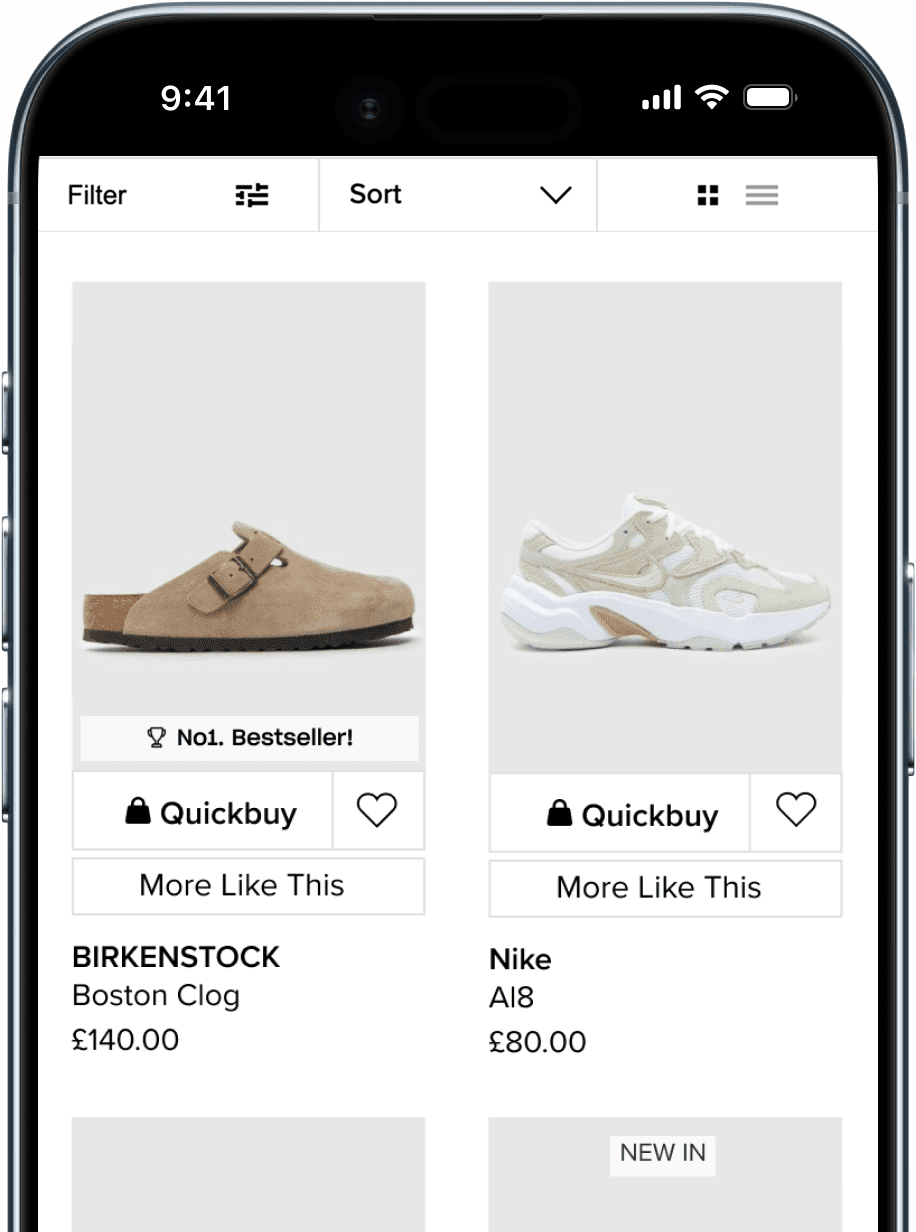
Schuh's category page product cards contained three buttons — Wishlist, Quickbuy, and More Like This. These buttons competed for limited space, resulting in a cluttered product card that was trying to do too many things at once.
My task was to investigate how the product cards could be redesigned to improve click-through and conversion rates.
The team
I was responsible for research, ideation, and UX/UI design. I collaborated with a UX/CRO Analyst who was responsible for assisting with research and building the A/B test.
What wasn't working?
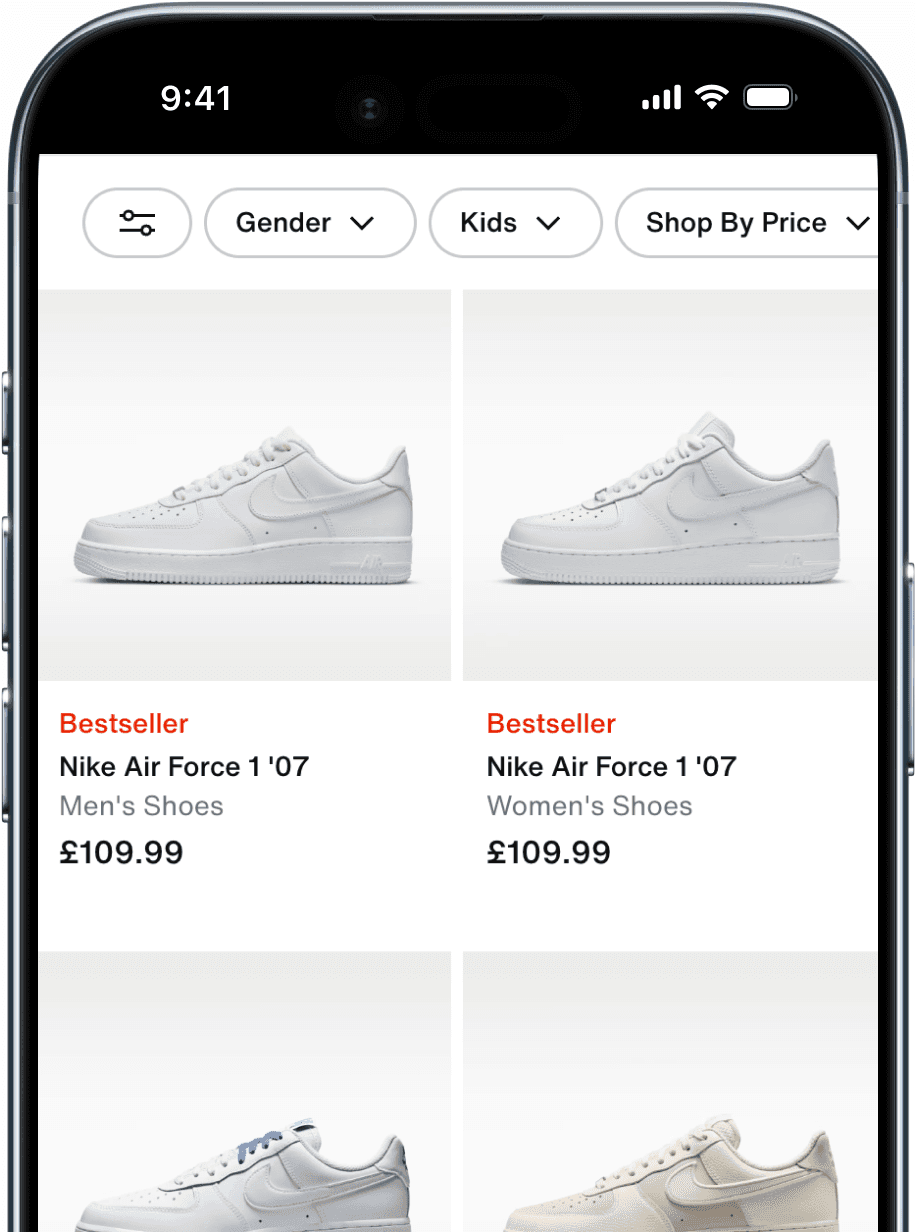
I identified a number of key improvement areas through competitor analysis and reviewing existing analytics.
More Like This drove 21% fewer click-throughs and 31% fewer purchases than Quickbuy
Working hypothesis
Since Quickbuy interaction led to higher click-through and conversion rates, increasing it could benefit both users and the business. Quickbuy performs well because it allows users to view more images and product information without leaving the category page. It also naturally attracts higher-intent shoppers — simply engaging with the button demonstrates above-average purchase intent. With this in mind, I explored several directions.
Explorations
These are some of the paths I considered before landing on the final design.


Final design
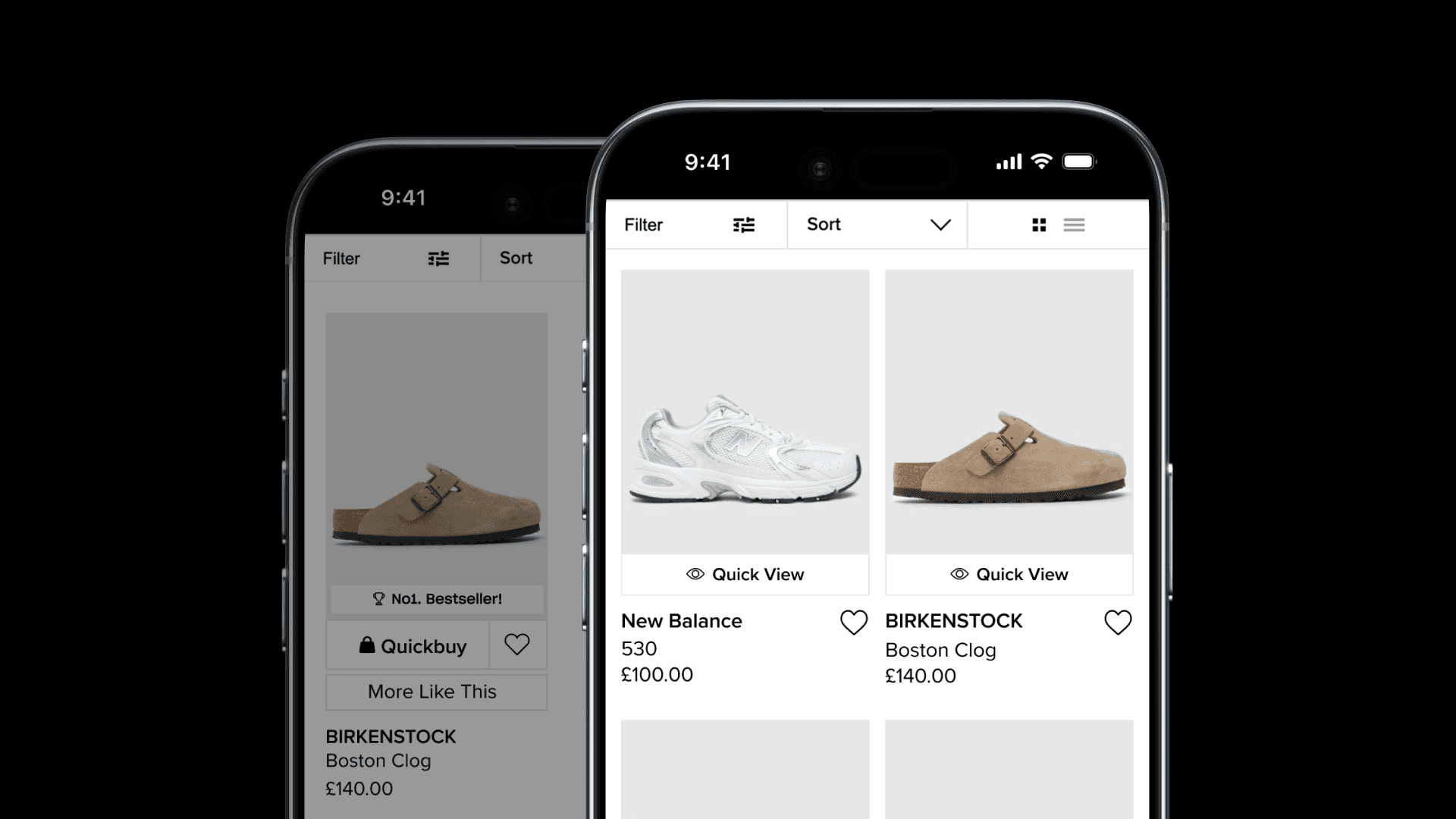
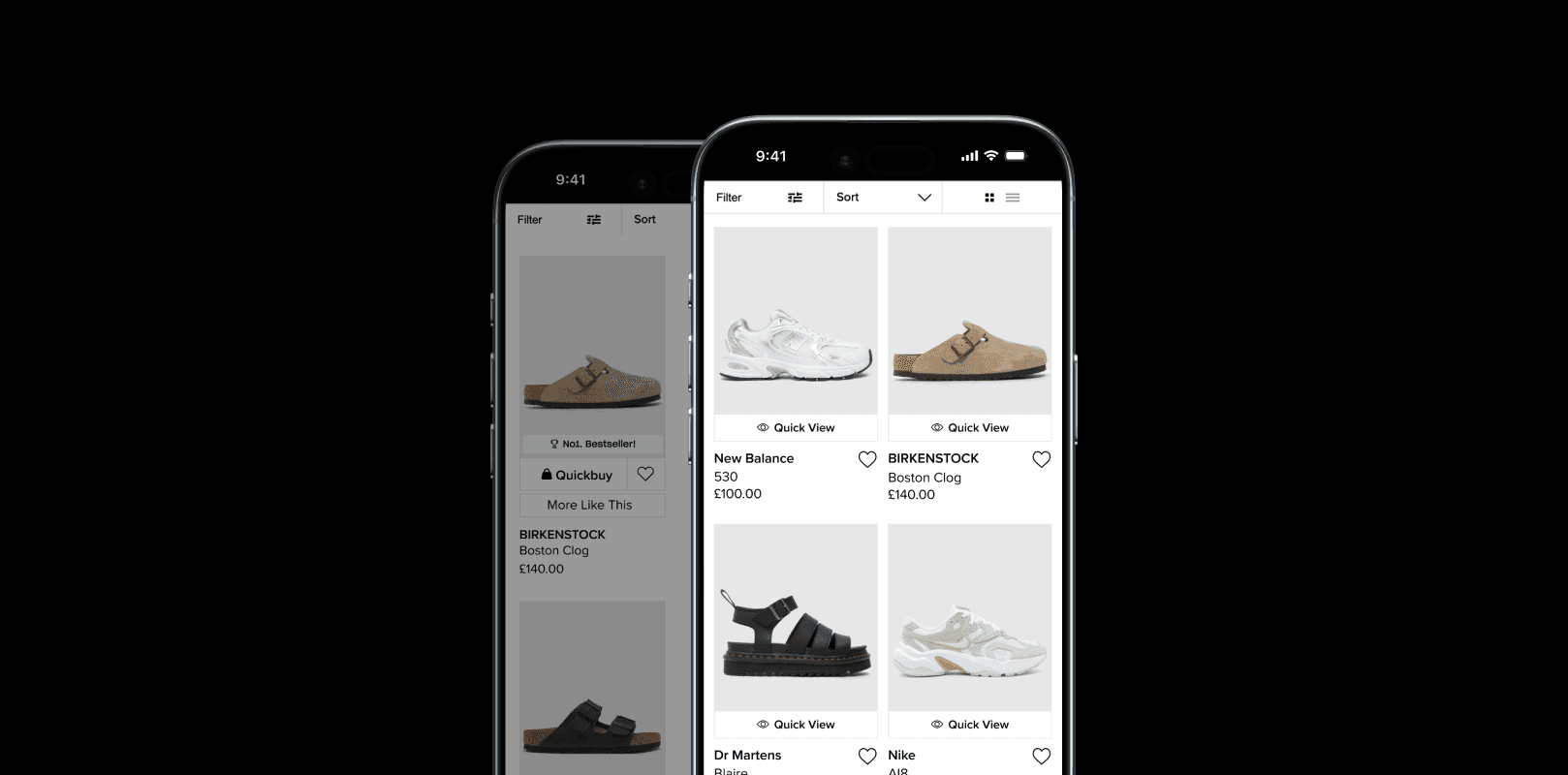
The redesign focused on a cleaner, calmer layout through reduced clutter and improved spacing, and optimising Quickbuy to drive higher click-through and conversion.
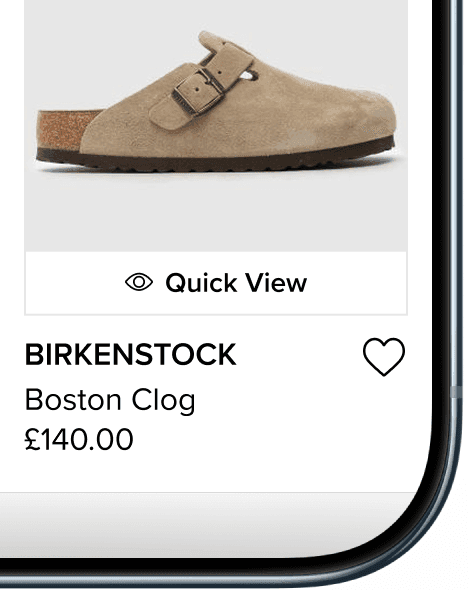
Quickbuy was renamed to Quick View — it requires less commitment and better aligns with the page's primary task, discovery.
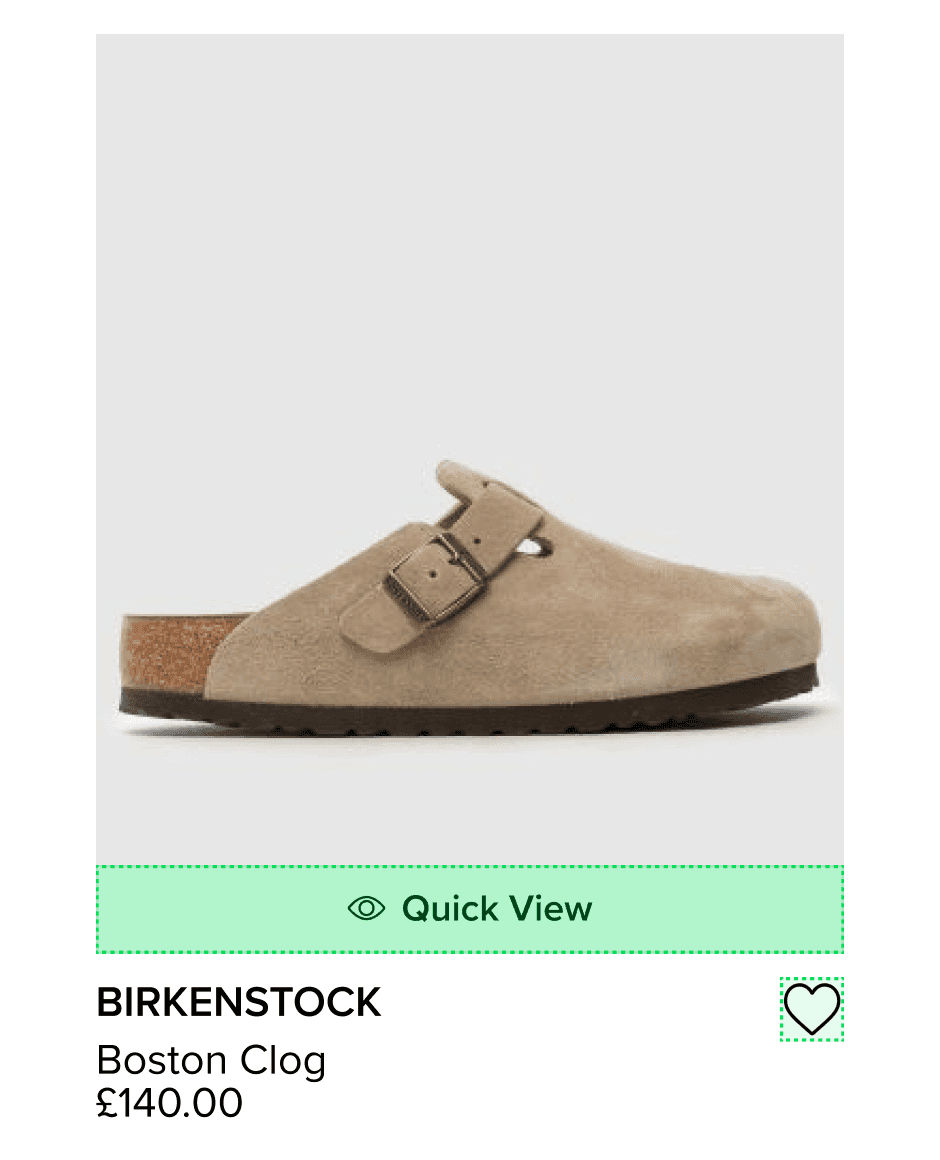
Removing More Like This and repositioning Wishlist simplified product card hierarchy and brought greater prominence to Quick View.
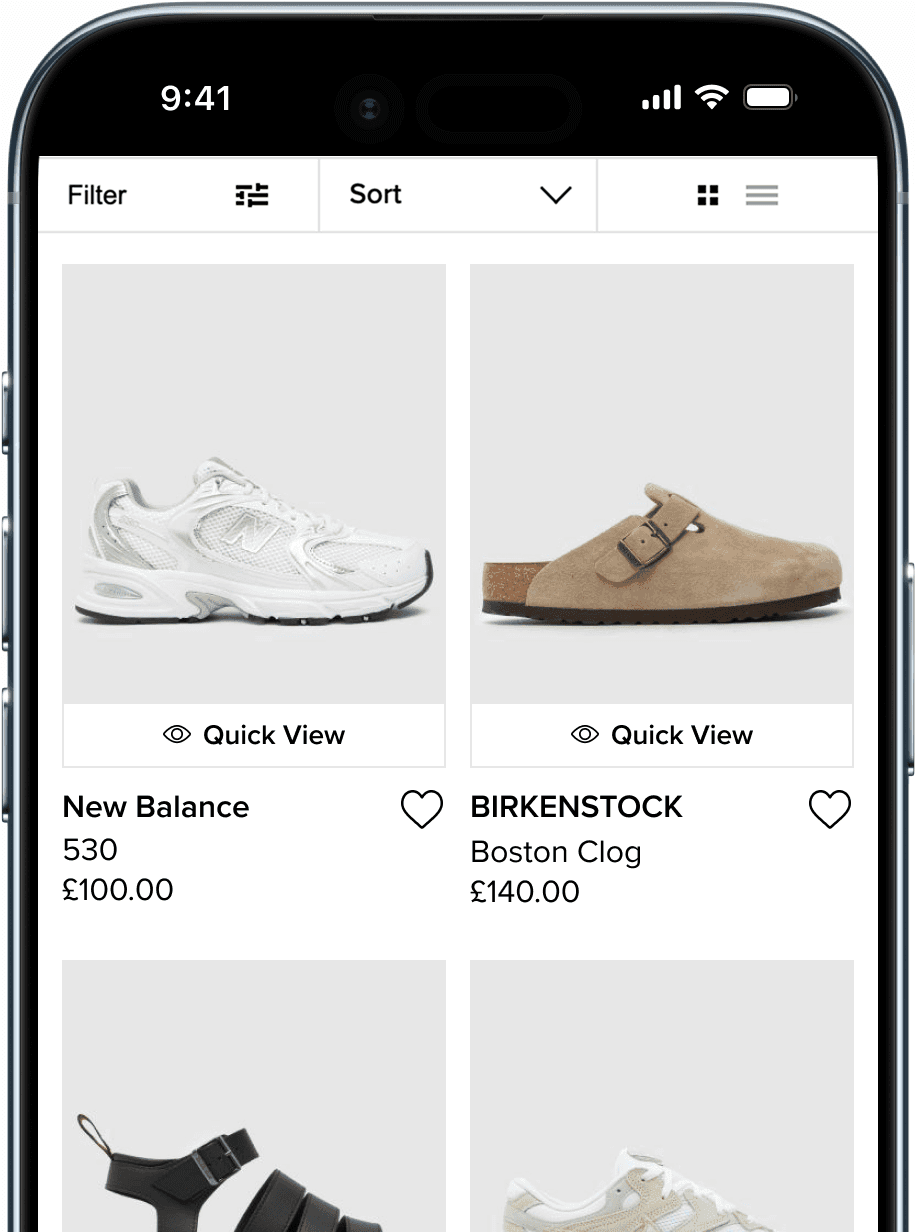

Impact
An A/B test was conducted over one week, with 50% of website users seeing the new product card design and 50% seeing the control. This resulted in statistically significant increases in the following key metrics.
Reflection
One gap in this project was the lack of usability testing. Whilst the A/B test validated the changes quantitatively, qualitative research early in the process could have uncovered deeper insights into user behaviour and surfaced opportunities I may not have identified through data and competitor analysis alone.


